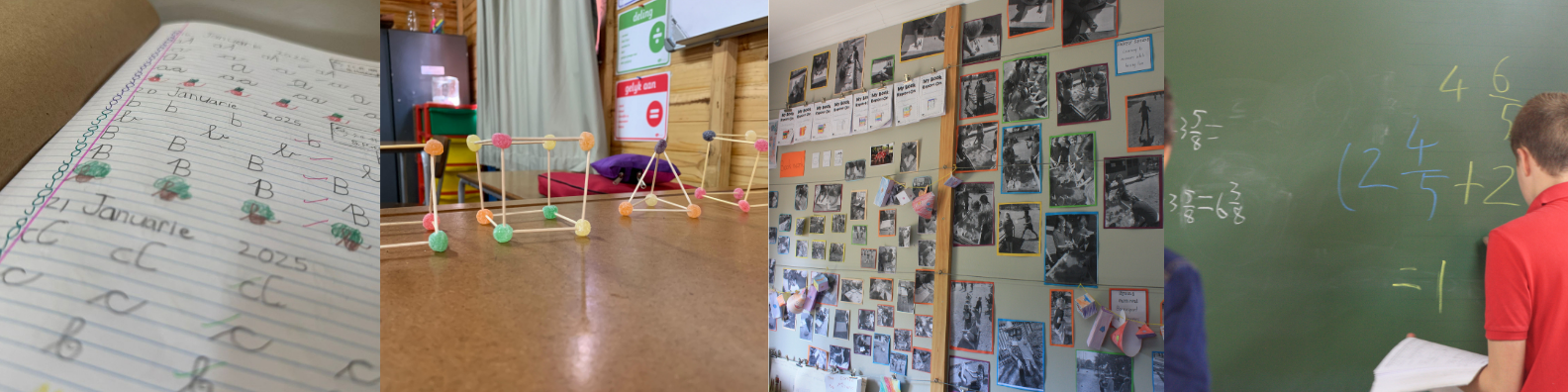
We welcome children from 7 to 14 years old, up to Grade 7.

At our Primary School, we believe that every child has unique talents, interests, and possibilities.

Here, learning comes alive through project-based activities that spark curiosity and make learning meaningful.

Because each child’s own interests and abilities set the direction, activities are guided by what inspires them. Daily observation and continuous assessment ensure that every learner’s growth is seen and supported.

Learner-centered lessons, emergent learning, and play form the building blocks of this phase. We create a space where children can discover, ask questions, work together, and build the confidence they need for the future.
Drama

Drama classes are presented weekly by a qualified drama coach. These sessions give children the emotional freedom to express themselves, leading to stronger self-confidence, better impulse control, and greater ease in speaking in front of others.

In the second term, we host Woeker Woorde, a fun and enriching event that sharpens learners’ language and performance skills.

The year concludes with our school concert, a highlight where every learner has the opportunity to celebrate their talent and creativity on stage.

Sport

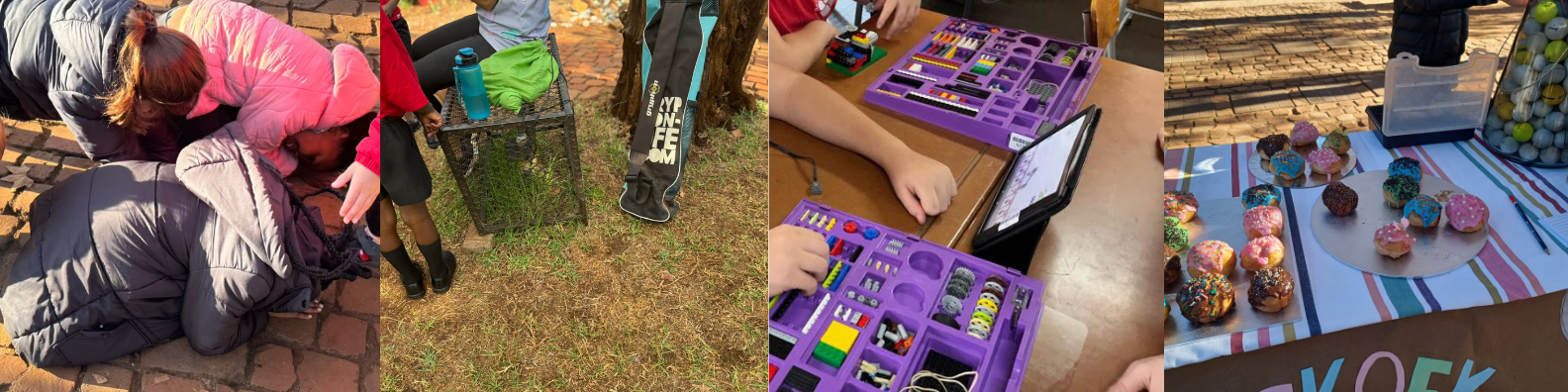
At Regio, we believe that true growth is not measured by competition, but by confidence and skill. That is why we place emphasis on balance, ball skills, general fitness, and the development of basic cricket, hockey, rugby, and soccer skills.

Sports periods are presented by a qualified biokineticist, ensuring that every child receives the right support and guidance. Two half-hour sessions per week are dedicated to sport and movement.

For us, sport and movement are about fun, participation, and growth — not only performance. A highlight of the year is our family day, where everyone can play, laugh, and learn together.

Lego /  Robotics

At Regio, we believe that learning happens best when children can discover, build, and play for themselves. That is why we partner with Young Engineers, whose facilitators present weekly classes for learners from Grade 3 – 7.

Lego play takes place once a week and serves as a practical way to bring scientific and mathematical principles to life:

  • In Grades 3 – 5, children use Lego to understand the basic principles of levers, gears, construction, and other mechanisms. These activities form a strong foundation for the development of mathematical skills.

  • In Grades 6 – 7, Lego Robotics is presented by a highly skilled engineer. Here, children learn to combine technology, problem-solving, and creative thinking while building and programming robots.

This program not only cultivates technical skills, but also develops critical thinking and collaboration.

Business skills

At Regio, we believe that children should not only learn how to learn, but also how to think creatively and practically.

Each year, an Entrepreneurship Day is held for Grades 3, 5, and 7. Children are encouraged to create their own business plan, design a stall, calculate profit or loss, and present a simple report. In this way, they combine creativity with practical life skills.

In addition, every class hosts a quarterly tuckshop day, where learners bring snacks and sell them to one another — a fun way to nurture entrepreneurial spirit and develop basic money skills.

Explore, Build, Learn

At Regio, we believe that learning comes alive when children are actively engaged.

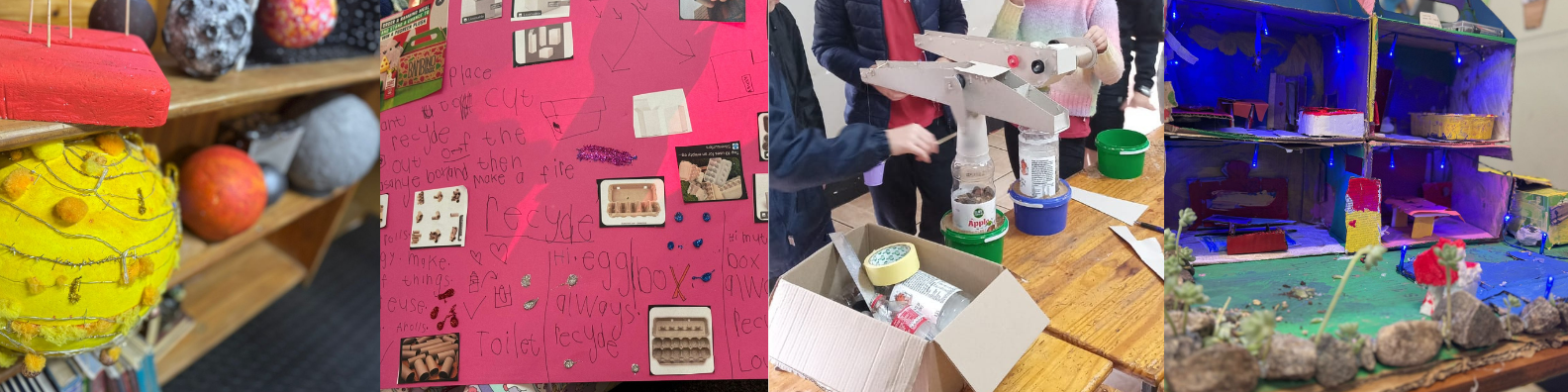
Through projects, knowledge and skills are not simply transferred, but discovered, built, and applied.

Learners work over an extended period of time – from a week to a full term – to solve a real-world problem or investigate a complex question. They demonstrate their learning by creating a tangible product or giving a presentation to a real audience.

In this way, children develop not only content knowledge, but also:

  • critical thinking
  • creativity
  • collaboration
  • communication skills

Project-Based Learning creates an infectious energy among learners and teachers alike.

Formal definition:
Project-Based Learning is a teaching method in which learners gain knowledge and skills by working for an extended period of time to investigate and respond to an authentic, engaging, and complex question, problem, or challenge.

Traditional school projects are often seen as a “dessert project” — something that comes after the content has been taught in the usual way. In contrast, Project-Based Learning is the “main course”: the project is the learning.

Robert Schuetz, Technology Coordinator at Palatine High School in Illinois, explains:

“We live in a world that is sustained and advanced by the successful completion of projects. Everything — from weekend tasks to fundraising — is essentially a project. This is also how modern careers function.”

Other learning experiences at Regio

Constructive play

Children build problem-solving, planning, and perseverance through building and creating.

Art

Art communicates ideas, shapes daily life, makes social statements, and can be enjoyed for its beauty.

Movement

Movement strengthens muscles, improves balance and coordination, and contributes to strong bones and overall health.

Emotional mentorship

We help children develop emotional intelligence: understanding emotions, handling stress, showing empathy, and resolving conflict positively.

Reading

Reading introduces new words and perspectives, strengthens language and sentence structure, and builds confidence as speakers.

Music

Music supports health and well-being. Research shows it can reduce stress, regulate blood pressure, and foster a sense of community.

Fieldtrips

Educational trips (e.g., to museums or industries) connect theory with practice, making learning more meaningful and enjoyable.

Creative problem solving

Children learn to generate original solutions to new problems — a skill that is critical in today’s world.

At Regio, we believe that learning goes deeper than textbooks and tests. Our children learn through projects that ask questions, solve problems, and spark creativity. Project-Based Learning brings knowledge to life and shows learners how to work together, think critically, and develop their unique abilities. Every project is a journey of discovery — from building ideas to celebrating outcomes. In this way, confidence, adaptability, and a lifelong love of learning are nurtured.